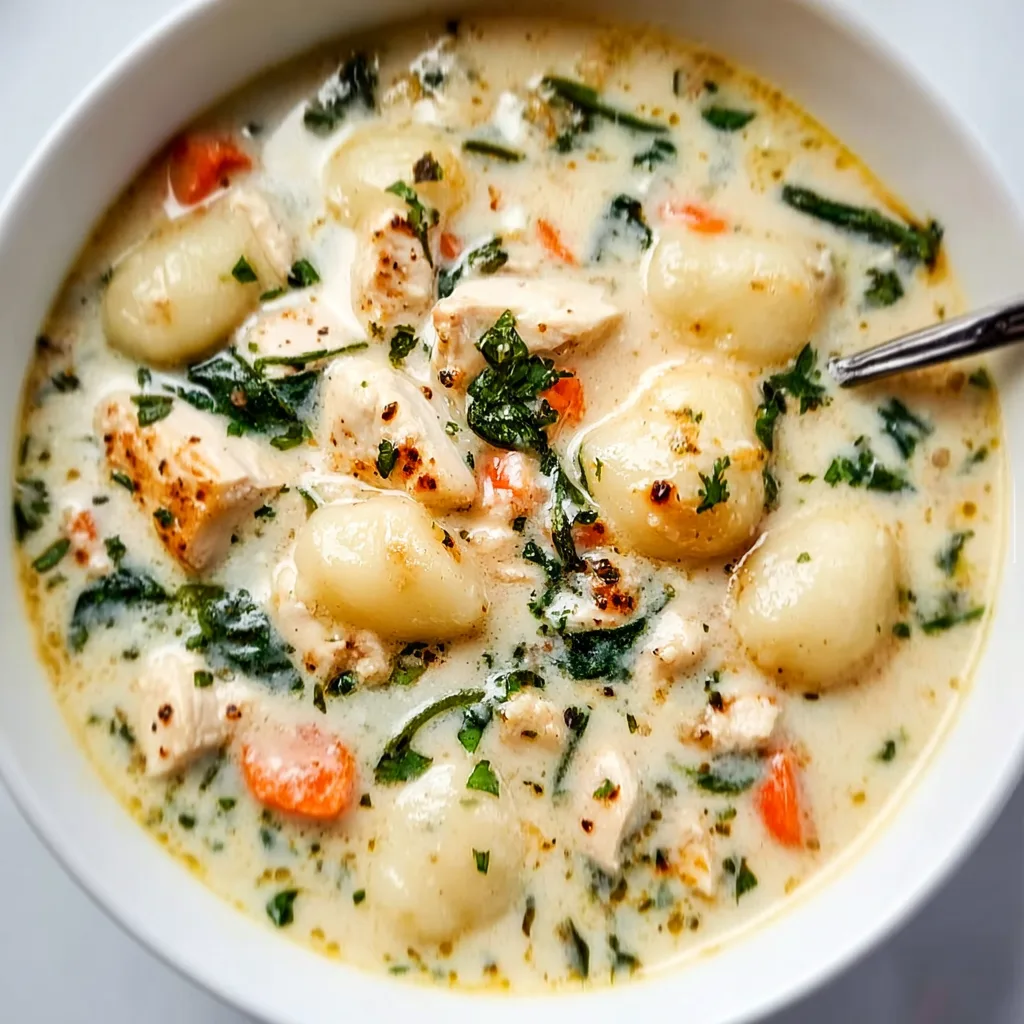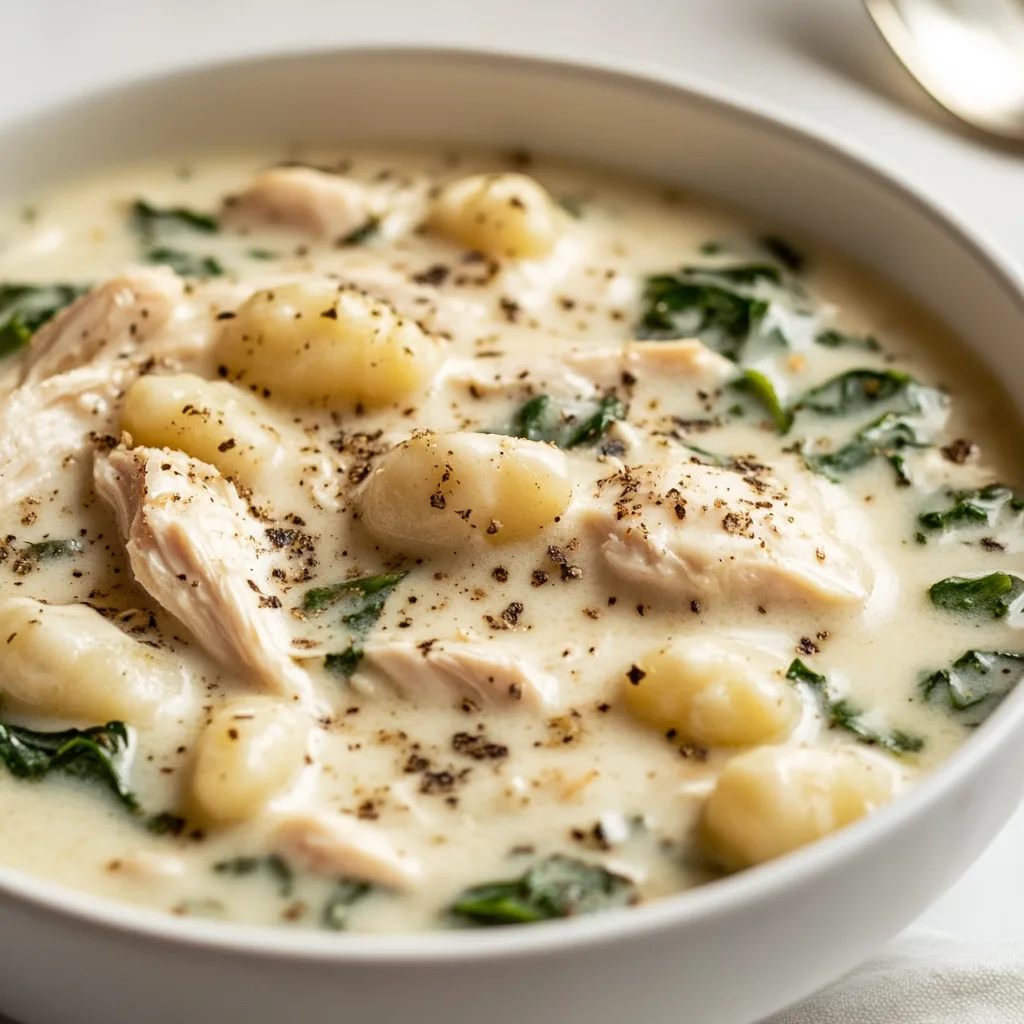

This Olive Garden-style chicken gnocchi soup builds a roux-thickened broth from sautéed onion and carrots, then simmers already-cooked chicken and potato gnocchi directly in it before finishing with spinach, ready in about 35 minutes. Building a flour roux before adding the broth, rather than thickening with cream alone, is what gives this soup its body without needing a long reduction.
Olive Garden Chicken Gnocchi Soup
Ingredients
- 🟡 For the Soup:
- 2 tbsp butter
- 1 tbsp olive oil
- 1/2 onion, diced
- 1 cup carrots, diced
- 2 cloves garlic, minced
- 1/4 cup all-purpose flour
- 4 cups chicken broth
- 1 cup half-and-half or heavy cream
- 1 cup cooked shredded chicken
- 1 (16 oz) package potato gnocchi
- 1 cup baby spinach
- Salt & pepper to taste
- 1/4 tsp thyme (optional)
- Grated Parmesan for serving
Instructions
- In a large pot, heat butter and olive oil over medium heat.
- Add onion and carrots. Sauté 4–5 minutes until softened. Add garlic and cook 1 more minute.
- Sprinkle in flour and stir for 1 minute to create a roux.
- Slowly whisk in chicken broth and bring to a simmer until slightly thickened.
- Stir in half-and-half, cooked chicken, and gnocchi. Simmer for 5–7 minutes until gnocchi are soft and floating.
- Add spinach and stir until wilted. Season with salt, pepper, and thyme if using.
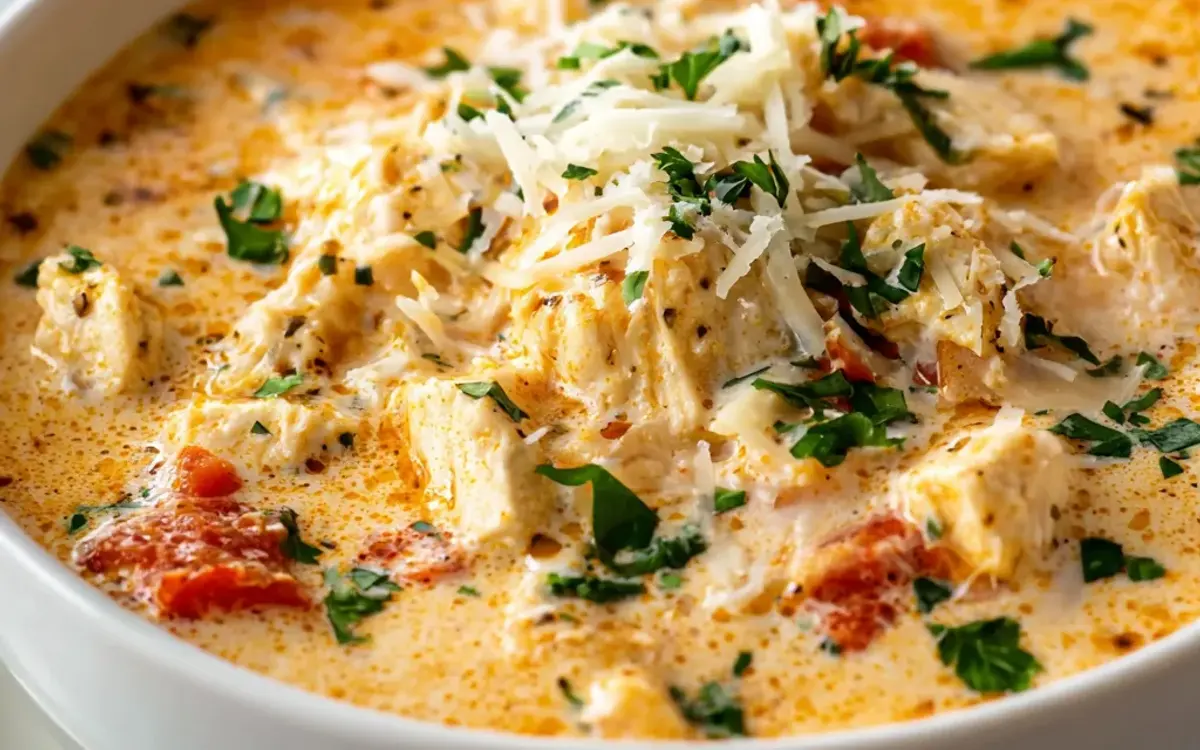
- Serve hot with grated Parmesan on top.
Recipe Notes
- Use rotisserie chicken to save time.
- For a lighter version, use milk and skip the flour for a thinner broth.
- Soup thickens as it sits—add extra broth when reheating leftovers.
Nutrition
- Serving Size
- 1 bowl
- Calories
- 430
- Sugar
- 4g
- Sodium
- 670mg
- Fat
- 24g
- Saturated Fat
- 11g
- Unsaturated Fat
- 11g
- Trans Fat
- 0g
- Carbohydrates
- 35g
- Fiber
- 2g
- Protein
- 23g
- Cholesterol
- 75mg
Why you'll love this
- Cooking the flour into the butter and vegetables for a full minute before adding liquid, as the instructions specify, cooks off the raw flour taste while still using it to thicken the broth as it's whisked in.
- Simmering the gnocchi directly in the thickened broth until it floats, rather than boiling it separately, lets it finish cooking while absorbing the soup's flavor at the same time.
Tips for the best result
- Whisk the broth in slowly after the roux is made, as the instructions imply, to avoid lumps forming as the liquid hits the flour-coated vegetables.
- Watch for the gnocchi to float and turn soft, the recipe's own visual cue for doneness, rather than timing it exactly.
Troubleshooting
The soup has lumps in it.
This usually means the broth was added too quickly to the roux. Whisk continuously while pouring the broth in gradually next time to keep the mixture smooth.
The soup is thinner than expected.
For a lighter version the recipe's own notes mention skipping the flour and using milk instead, which naturally produces a thinner broth - if a thicker soup is wanted, make sure the roux step wasn't skipped.
Soup is too thin.
try a quick thickening method by making a slurry with 1 tablespoon cornstarch and 2 tablespoons cold water.
The recipe's own notes say the soup thickens as it sits, so add extra broth when reheating leftovers.
The recipe's own notes suggest grated Parmesan on top for serving.
Frequently asked questions
Can I make Olive Garden Chicken Gnocchi Soup in advance?
Yes! Make the base without gnocchi up to 2 days ahead. When ready to serve, reheat gently, add gnocchi, and simmer for 3-4 minutes until tender.
What can I substitute for heavy cream?
Half-and-half, evaporated milk, or a dairy-free alternative like coconut cream all work well. Each creates a slightly different flavor profile but maintains creaminess.
Is there a shortcut version using rotisserie chicken?
Absolutely! Shredded rotisserie chicken saves significant time. Add it during the last 10 minutes of cooking to warm through without overcooking.
Can I use frozen gnocchi instead of fresh?
Yes, frozen gnocchi works perfectly! No need to thaw—just add directly to the simmering soup and cook until they float to the surface.
Why did my soup turn out grainy?
This typically happens when cream is added to very hot liquid or when the soup boils after adding cream. Always reduce heat before adding cream and maintain a gentle simmer.
Save this recipe for later
Keep this recipe handy when you are planning another chicken dinner.
Save on Pinterest