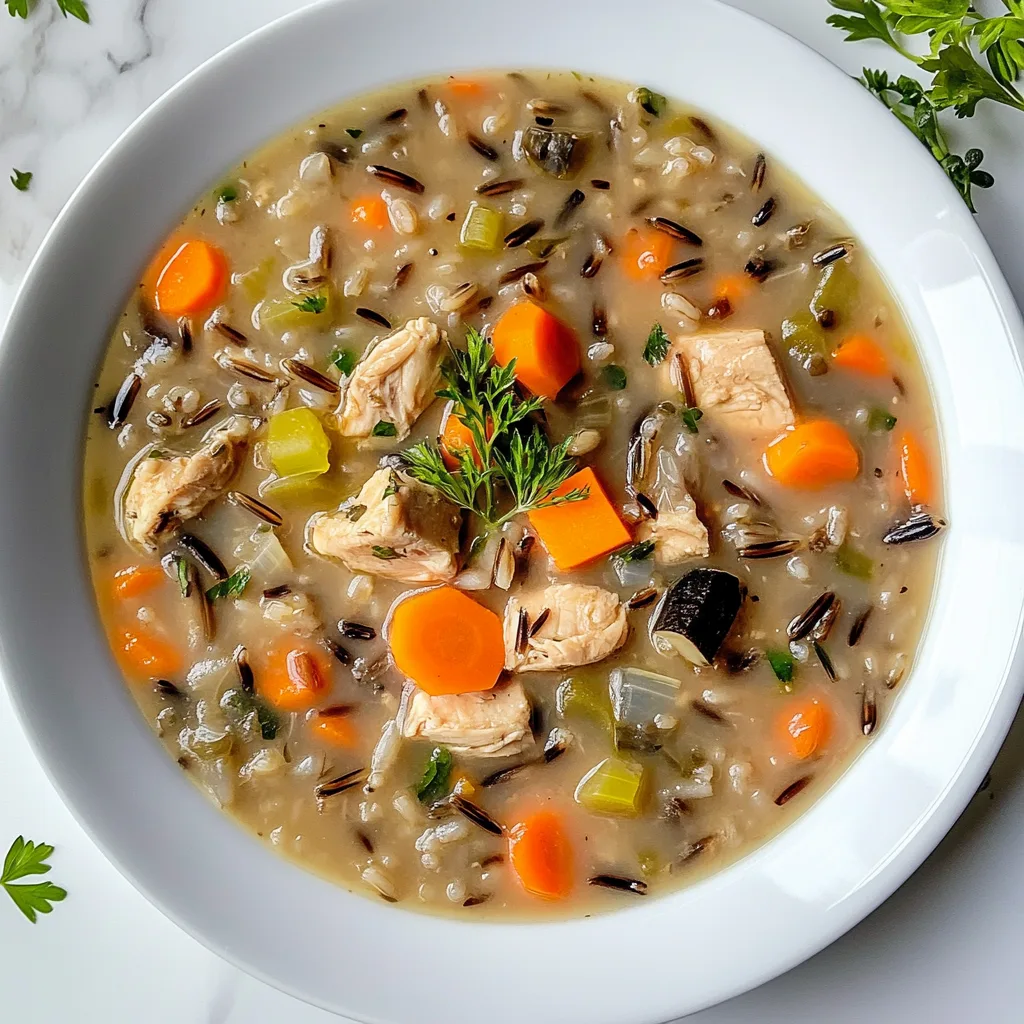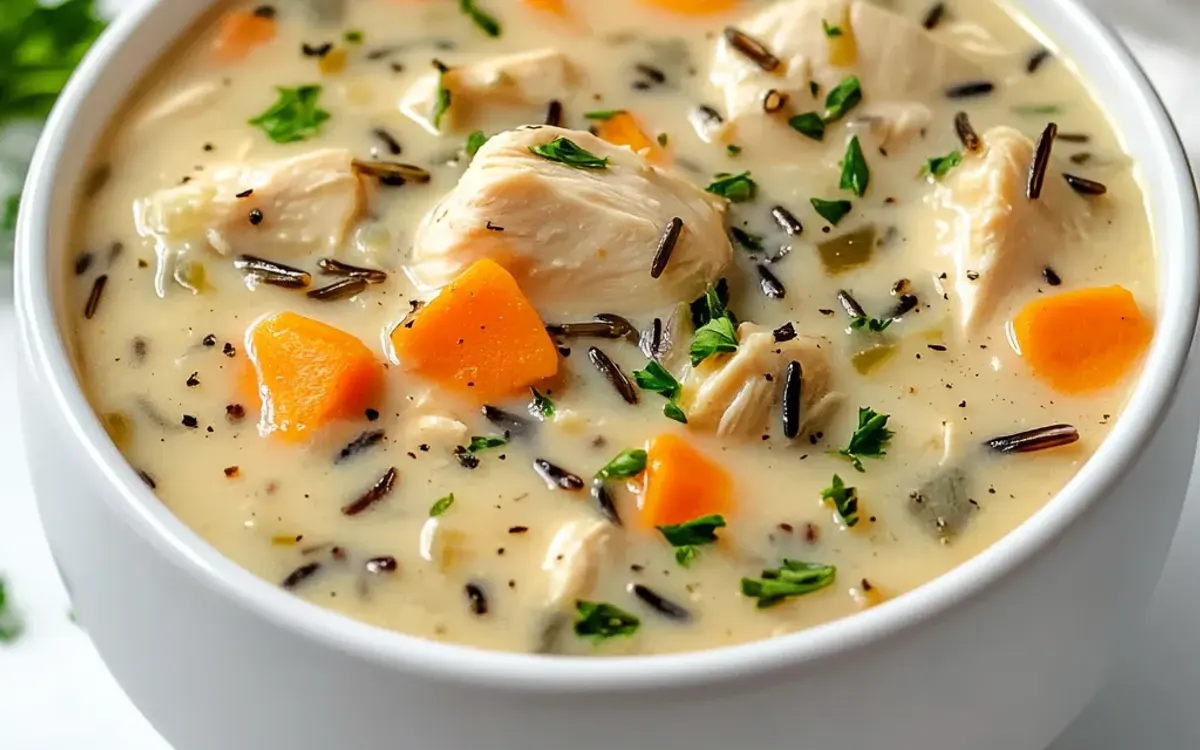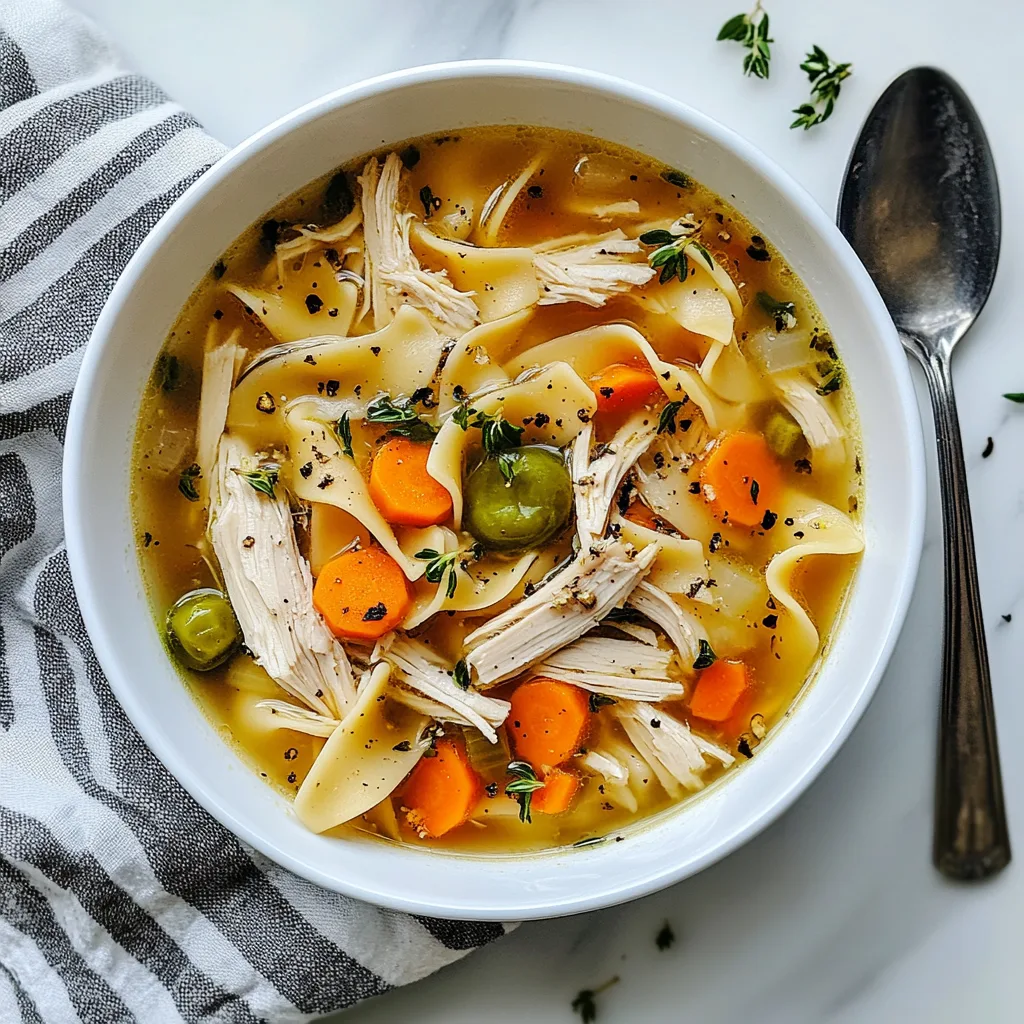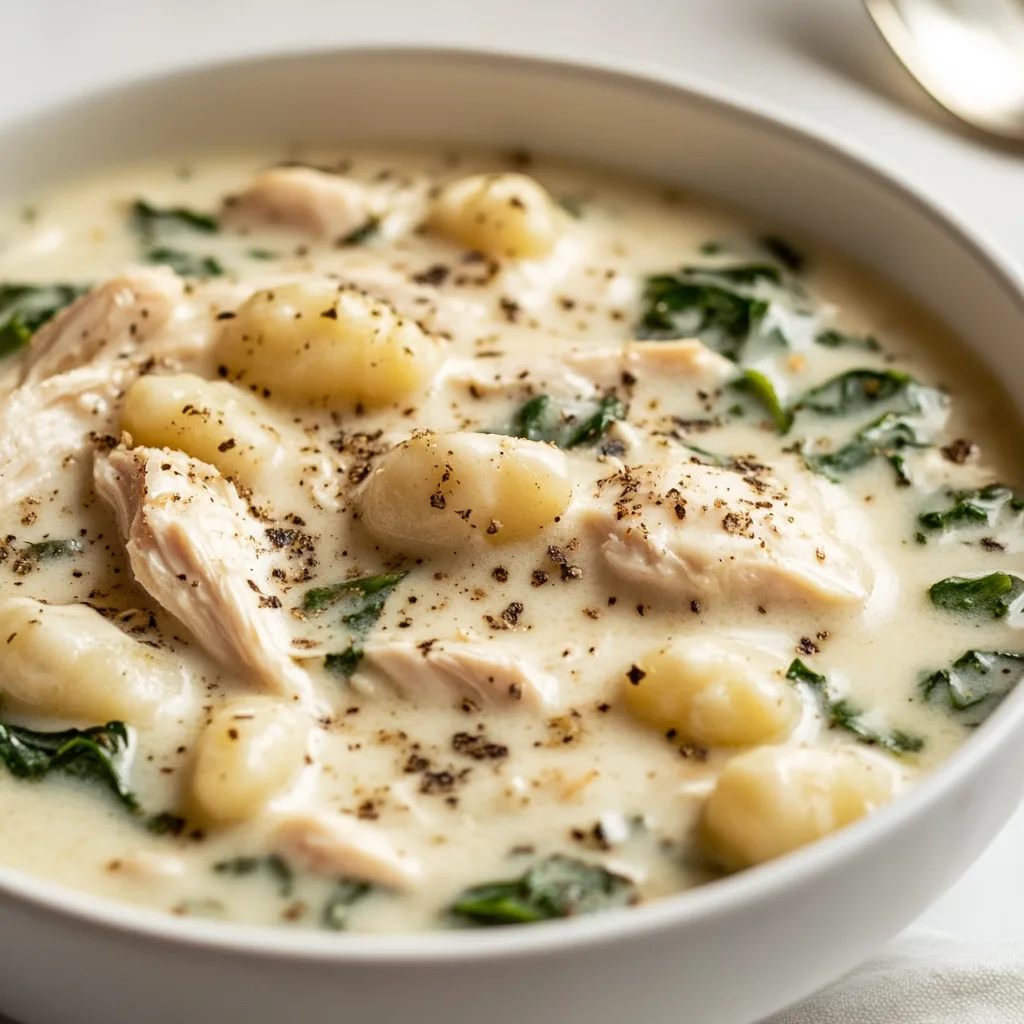

This wild rice soup simmers uncooked wild rice directly in chicken broth with vegetables for 40-50 minutes until the rice is tender, then finishes with a milk-and-flour slurry stirred in to thicken it, along with shredded chicken. Using true wild rice rather than a quick-cooking blend is what gives the soup its longer simmer time and characteristically chewy texture.
Chicken, Wild Rice, and Vegetable Soup
Ingredients
- 1 lb cooked shredded chicken (rotisserie works great)
- 1 cup uncooked wild rice (not instant)
- 1 small onion, diced
- 2 carrots, sliced
- 2 celery stalks, sliced
- 3 cloves garlic, minced
- 6 cups chicken broth
- 1 cup milk or half-and-half
- 1 cup sliced mushrooms (optional)
- 2 tbsp butter or olive oil
- 1 tsp dried thyme
- ½ tsp dried rosemary
- ½ tsp black pepper
- Salt, to taste
- 2 tbsp gluten-free or all-purpose flour (for thickening)
- Fresh parsley, for serving
Instructions
- In a large pot, heat butter or oil over medium heat. Add onion, carrots, and celery; sauté 4–5 minutes until softened.
- Stir in garlic, thyme, rosemary, salt, and pepper; cook 1 minute.
- Add wild rice and chicken broth. Bring to a boil, then reduce heat and simmer 40–50 minutes, stirring occasionally, until rice is tender.
- Stir in shredded chicken and mushrooms (if using).
- In a small bowl, whisk flour with milk until smooth. Pour into the soup and simmer 5–10 minutes until creamy and thickened.
- Taste and adjust seasoning as needed.
- Serve warm topped with fresh parsley.
Recipe Notes
- Use rotisserie chicken for fastest prep.
- Add spinach at the end for extra veggies.
- Swap milk for coconut milk for dairy-free creaminess.
- Soup thickens as it cools — add broth when reheating.
Nutrition
- Serving Size
- 1½ cups
- Calories
- 320
- Sugar
- 5g
- Sodium
- 640mg
- Fat
- 10g
- Saturated Fat
- 4g
- Unsaturated Fat
- 5g
- Trans Fat
- 0g
- Carbohydrates
- 38g
- Fiber
- 3g
- Protein
- 22g
- Cholesterol
- 65mg
Why you'll love this
- Simmering the wild rice for the full 40-50 minutes the recipe calls for is necessary because wild rice takes noticeably longer to cook than white or brown rice - cutting this short leaves the rice hard in the center.
- Whisking the flour into the milk first before adding it to the pot, rather than adding flour directly to the hot broth, prevents lumps from forming as the soup thickens.
Tips for the best result
- Whisk the flour and milk together completely smooth before pouring it in, as the instructions specify, since adding either separately risks a lumpy soup.
- Stir occasionally while the wild rice simmers so it doesn't settle and stick to the bottom of the pot over the long cook time.
Troubleshooting
The rice is still chewy or hard after the full simmer time.
Wild rice cook times vary by batch. Continue simmering in 5-10 minute increments, adding a splash more broth if the liquid runs low, rather than serving it before it's fully tender.
The soup is thin instead of creamy.
Make sure the flour was fully whisked into the milk with no lumps before adding it, and let the soup simmer the full 5-10 minutes afterward so the flour has time to thicken it.
Wild rice remains too firm after the recommended cooking time.
your simmer might be too gentle—increase the heat slightly and continue cooking, checking every 5 minutes.
The recipe's own notes say the soup thickens as it cools, so add broth when reheating leftovers.
The recipe's own notes suggest stirring in spinach at the end for extra vegetables, or swapping milk for coconut milk for a dairy-free version.
Frequently asked questions
Can I use regular rice instead of wild rice?
You can substitute long-grain brown rice, but reduce cooking time to 35 minutes. White rice needs only 15-20 minutes but lacks the nutty flavor and nutritional benefits of wild rice.
Is this soup with wild rice, veggies, and chicken freezer-friendly?
Absolutely! It freezes beautifully for up to 3 months. The wild rice maintains its texture better than other varieties when frozen and reheated.
Can I make this in a slow cooker?
Yes! Cook on low for 6-7 hours, adding the wild rice during the final 2 hours to prevent it from becoming mushy.
How can I make this recipe dairy-free?
Simply substitute olive oil for butter and use coconut milk instead of cream. The soup remains deliciously rich with a subtle coconut undertone.
What’s the best chicken to use?
Bone-in, skin-on chicken thighs provide the richest flavor, but boneless breasts work well for a leaner option. Either way, cook to 165°F for food safety.
Save this recipe for later
Keep this recipe handy when you are planning another chicken dinner.
Save on Pinterest