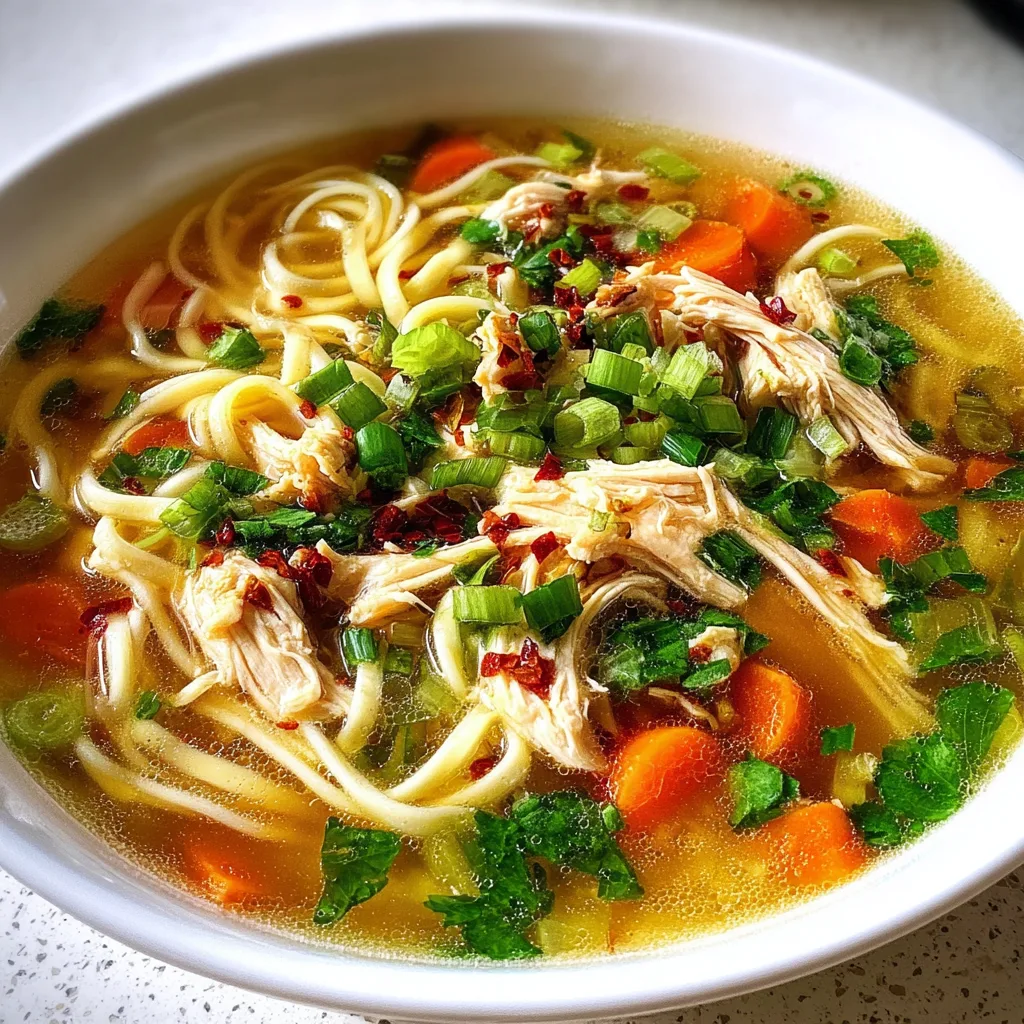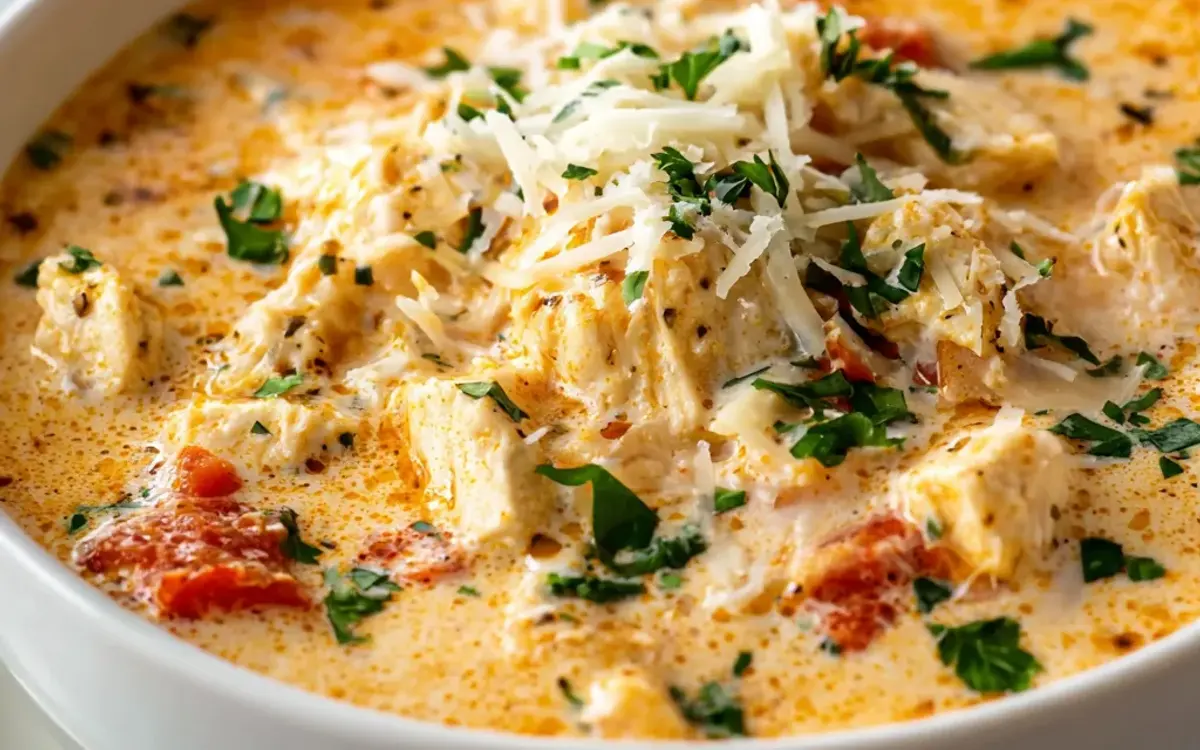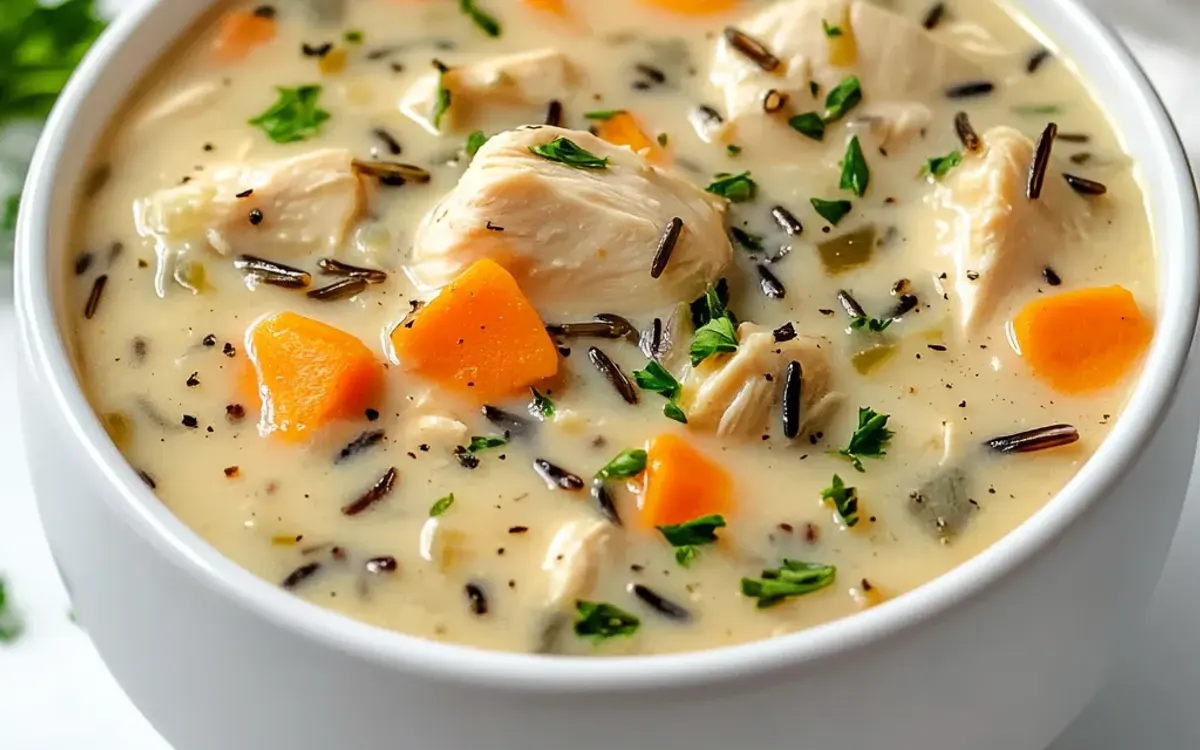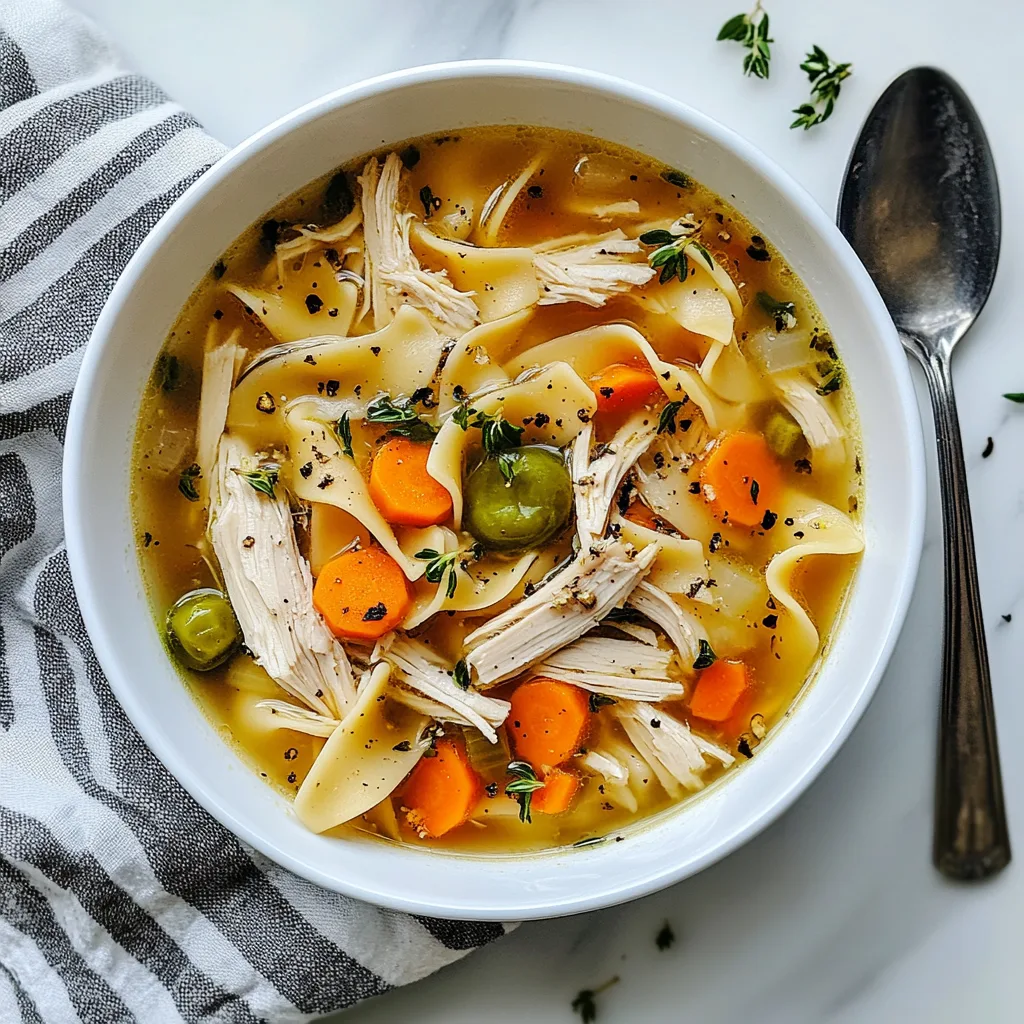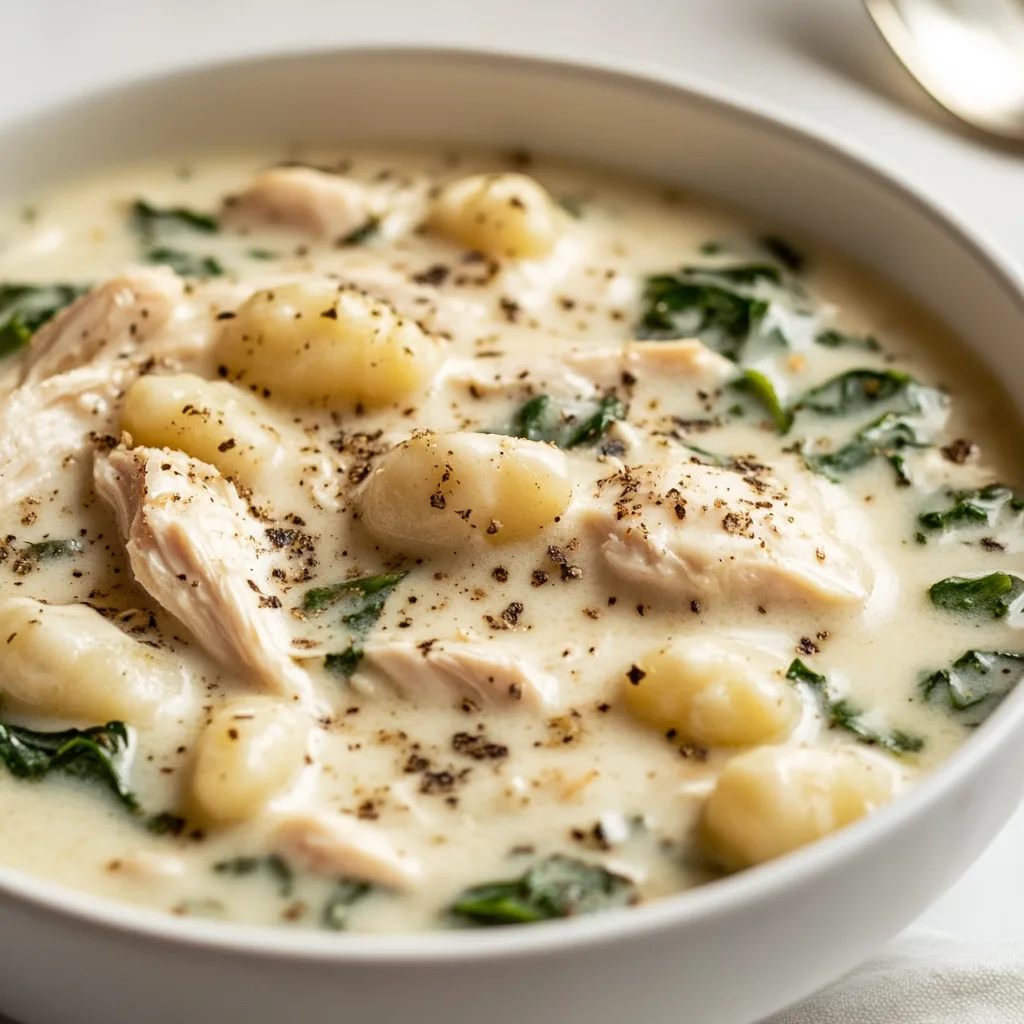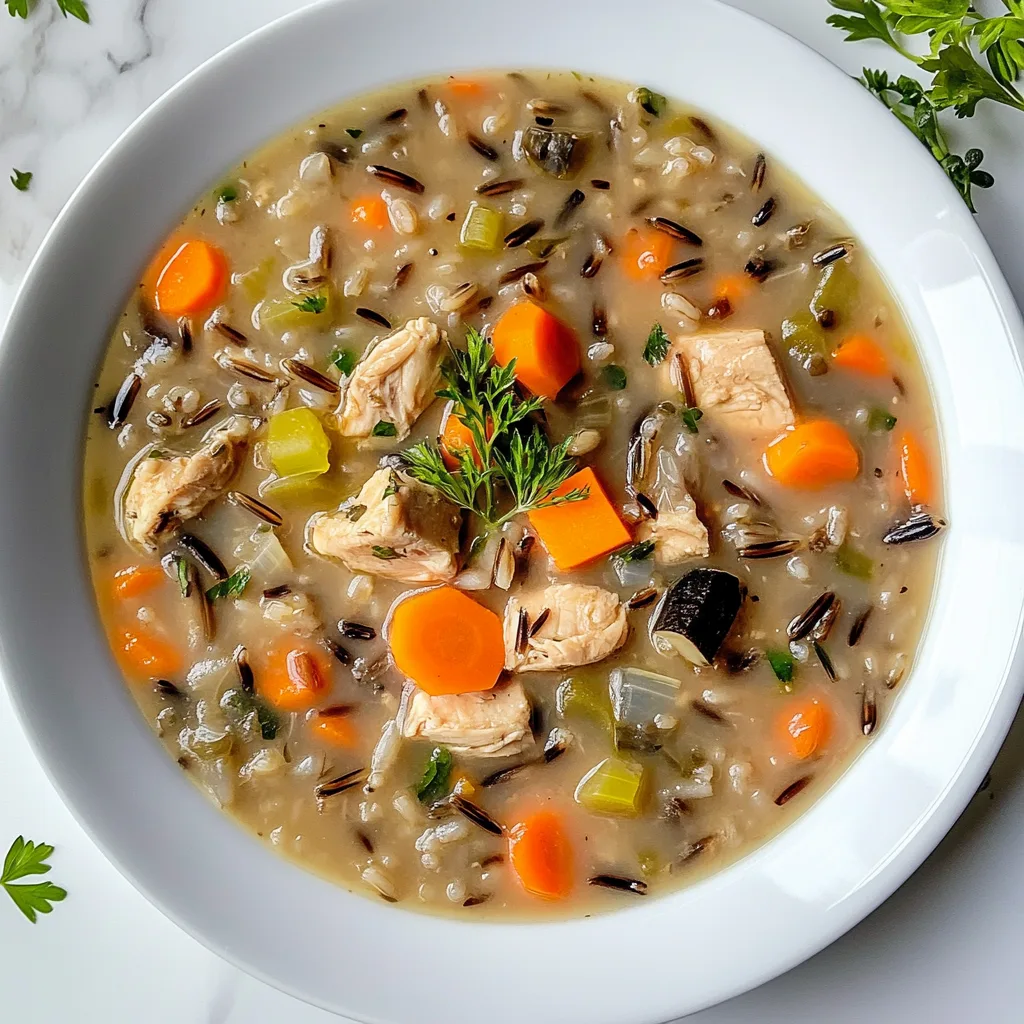

Ginger garlic chicken noodle soup simmers chicken with onion, carrots, celery, fresh ginger, garlic, and broth, then finishes with egg noodles, soy sauce, and green onions. The 45-minute stovetop method keeps the aromatics distinct and adds the noodles only after the chicken has been shredded.
Classic Ginger Garlic Chicken Noodle Soup
Ingredients
- 1 lb boneless skinless chicken breasts or thighs
- 1 tbsp olive oil
- 1 small onion, diced
- 2 carrots, sliced
- 2 celery stalks, sliced
- 4 cloves garlic, minced
- 1 tbsp fresh ginger, grated
- 8 cups chicken broth
- Salt and black pepper, to taste
- To finish:
- 6 oz egg noodles
- 2 tbsp soy sauce or tamari
- 2 green onions, sliced
- Optional add-ins:
- Fresh parsley
- Lemon juice
- Sesame oil
Instructions
- Heat olive oil in a large pot over medium heat.
- Add onion, carrots, and celery and sauté until softened.
- Stir in garlic and ginger and cook until fragrant.
- Add chicken and chicken broth.
- Season with salt and pepper.
- Bring to a gentle boil, then reduce heat and simmer for 15–20 minutes until chicken is cooked through.
- Remove chicken, shred it, and return it to the pot.
- Add egg noodles and cook until tender.
- Stir in soy sauce and green onions.
- Taste and adjust seasoning.
- Serve hot.
Recipe Notes
- • Ginger and garlic boost flavor and warmth.
- • Add chili oil or sriracha for heat.
- • Leftovers keep well for 2–3 days.
Nutrition
- Serving Size
- 1 bowl
- Calories
- 420
- Sugar
- 4g
- Sodium
- 780mg
- Fat
- 12g
- Saturated Fat
- 2g
- Unsaturated Fat
- 8g
- Trans Fat
- 0g
- Carbohydrates
- 38g
- Fiber
- 3g
- Protein
- 34g
- Cholesterol
- 95mg
Why you'll love this
- Cooking ginger and garlic briefly after the vegetables softens their raw edge before the broth is added.
- Removing the cooked chicken before adding noodles makes shredding easier and prevents the chicken from breaking into the noodle cooking water.
Tips for the best result
- Keep the broth at a gentle simmer while the chicken cooks and verify the thickest piece reaches 165°F before shredding.
- Add the egg noodles only when the soup is otherwise ready; they continue to soften as they sit in hot broth.
- Taste after adding soy sauce before adding more salt.
Troubleshooting
The noodles became soft in leftovers
They continued absorbing broth after cooking. For make-ahead portions, cook noodles separately and add them to each bowl.
The broth tastes flat
First check salt after the soy sauce is added. A small amount of the listed optional lemon juice can brighten the finished broth without changing the cooking method.
Soup seems bland or flat.
try adding a splash of fish sauce or soy sauce rather than more salt—these additions bring umami depth without just increasing saltiness.
Recipe variations
- Transform this classic into a coconut-ginger variation by replacing half the chicken broth with coconut milk and adding a tablespoon of red curry paste.
- For a spicier kick, incorporate thinly sliced jalapeños or a dollop of chili oil on top.
- Make it heartier by adding cubes of butternut squash or sweet potato during the last 15 minutes of cooking.
- For a Vietnamese-inspired twist, add fish sauce, lime juice, and bean sprouts, then garnish with fresh basil and cilantro.
- Vegetarians can substitute mushroom broth and add extra shiitakes and firm tofu cubes for a satisfying meatless version that still delivers on flavor.
Refrigerate within 2 hours and use within 3 to 4 days. Reheat to 165°F; add broth if noodles stored in the soup absorbed too much liquid.
This is a complete light meal; serve bread alongside only if you want something for the broth.
Frequently asked questions
Can I make Classic Ginger Garlic Chicken Noodle Soup in advance?
Yes! Make the broth with chicken and vegetables up to 3 days ahead, but add fresh noodles when reheating to prevent them from becoming mushy.
What’s the best cut of chicken to use?
Bone-in, skin-on chicken thighs provide the richest flavor, but boneless thighs or breast meat work well for a leaner option with faster cooking time.
Can I use dried ginger instead of fresh?
Fresh is strongly preferred for its vibrant flavor, but in a pinch, use 1/4 teaspoon dried ginger powder for each tablespoon of fresh ginger called for.
How do I keep noodles from getting soggy?
Cook noodles separately and add to individual serving bowls, or slightly undercook them if adding directly to the soup pot.
Can I make this soup vegetarian?
Absolutely! Substitute vegetable broth and add extra mushrooms, tofu, or chickpeas for protein while keeping the ginger-garlic flavor profile.
Save this recipe for later
Keep this recipe handy when you are planning another chicken dinner.
Save on Pinterest