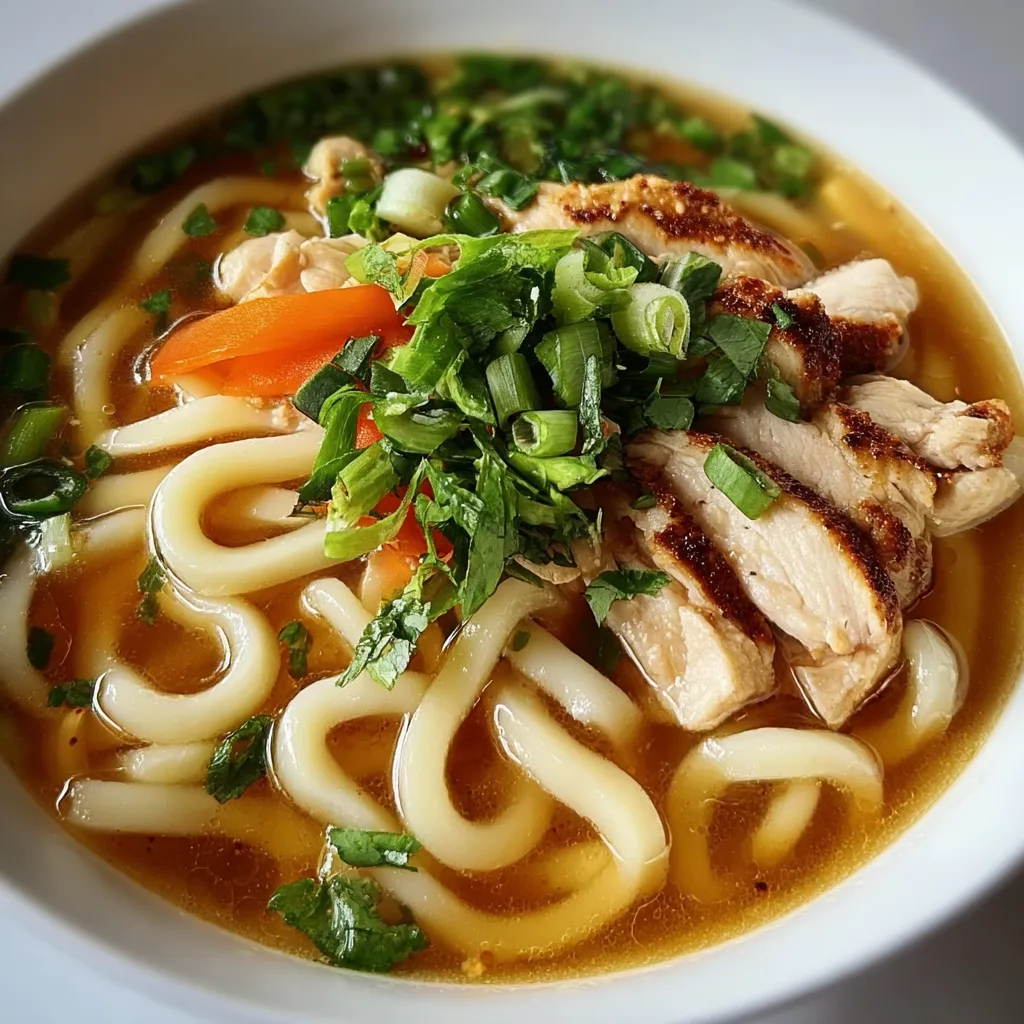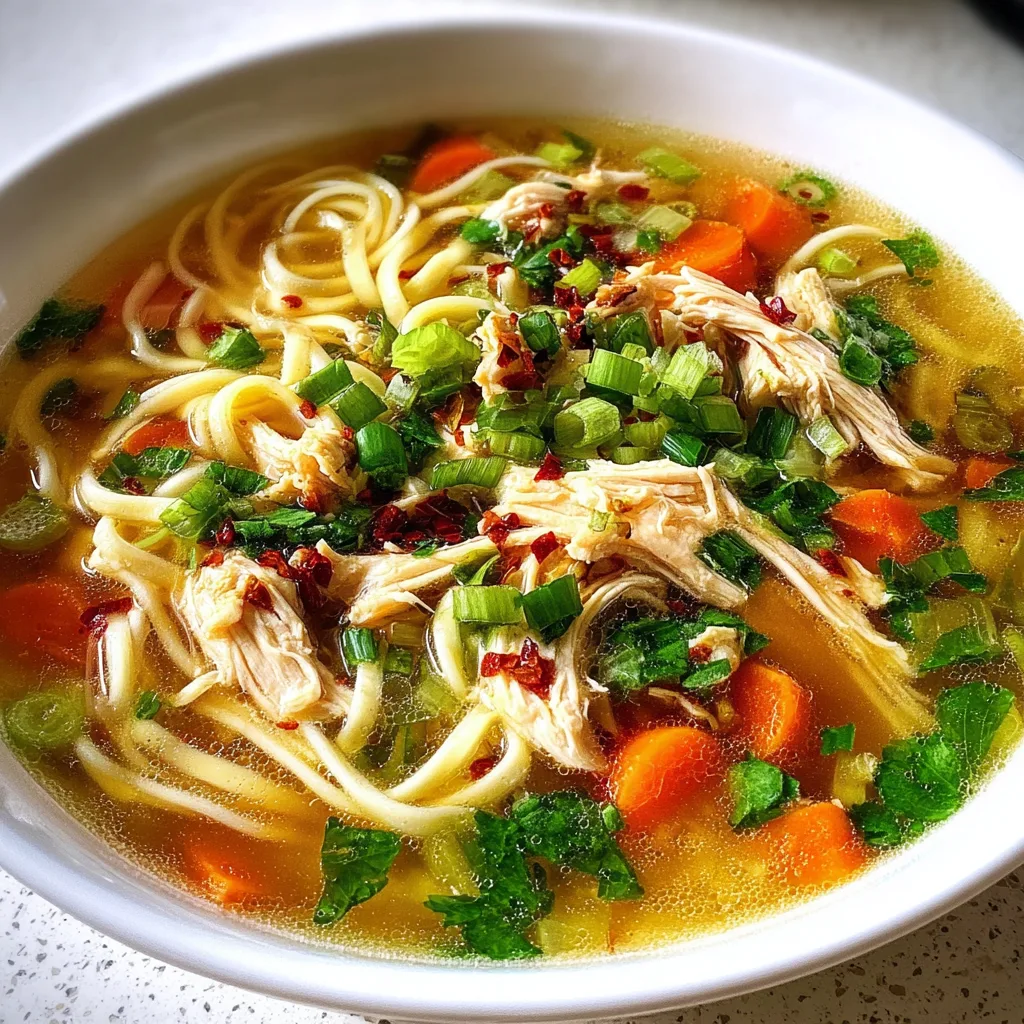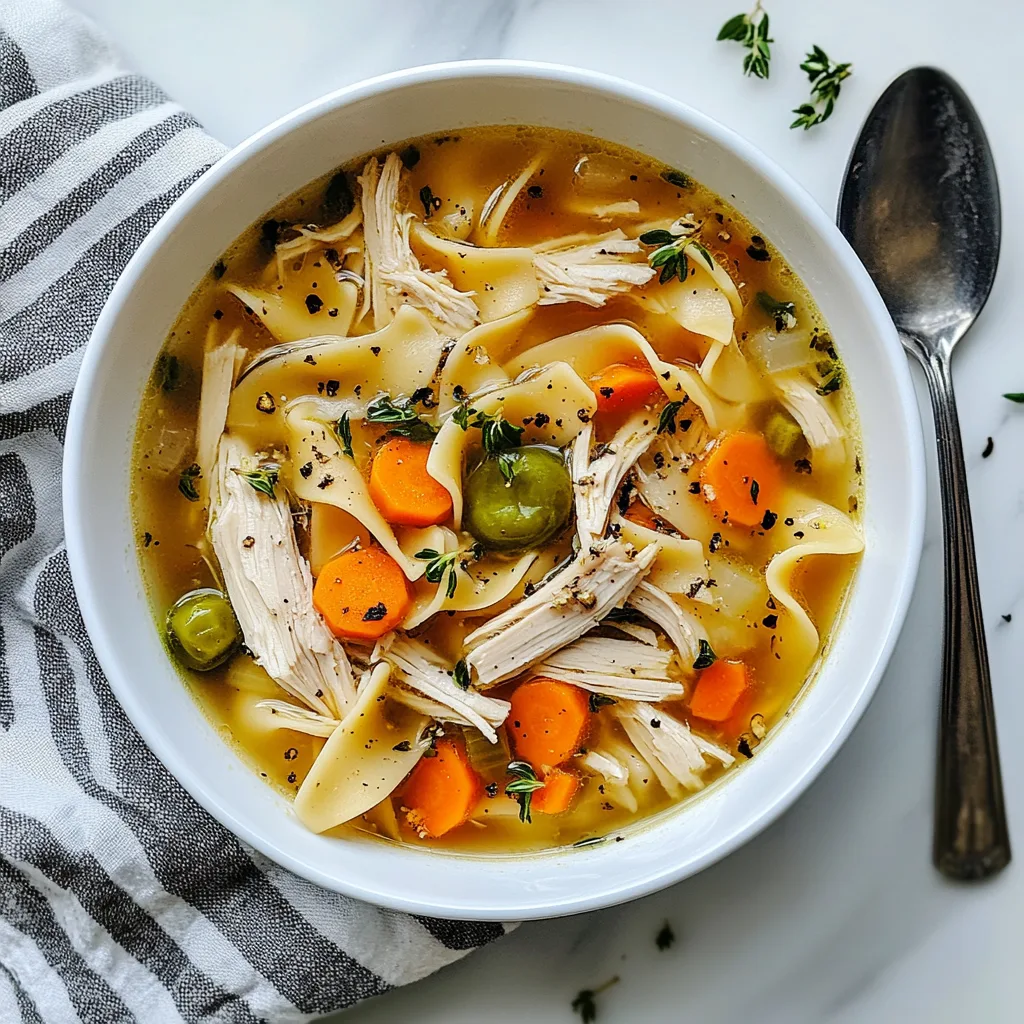

Chicken udon soup is thin-sliced chicken cooked in sesame oil, then simmered in a soy-mirin broth with mushrooms, finished with udon noodles cooked separately and spinach wilted in at the end, ready in about 30 minutes. Cooking the noodles separately from the broth, rather than directly in it, keeps their starch from clouding or thickening the broth.
Chicken Udon Soup
Ingredients
- 1 tablespoon sesame oil
- 2 boneless, skinless chicken thighs or breasts, thinly sliced
- 1 garlic clove, minced
- 1 teaspoon fresh ginger, grated
- 4 cups low-sodium chicken broth
- 2 tablespoons soy sauce
- 1 tablespoon mirin (optional)
- 1 teaspoon rice vinegar
- 2 servings fresh or frozen udon noodles
- 1 cup sliced mushrooms (shiitake or cremini)
- 1/2 cup baby spinach or bok choy
- 2 green onions, sliced
- Soft-boiled egg (optional, for topping)
Instructions
- In a large pot, heat sesame oil over medium heat. Add garlic and ginger, and sauté for 30 seconds.
- Add sliced chicken and cook until no longer pink, about 4–5 minutes.
- Pour in chicken broth, soy sauce, mirin (if using), and rice vinegar. Bring to a simmer.
- Add mushrooms and simmer for another 5–6 minutes until tender.
- Meanwhile, cook udon noodles according to package instructions, then drain and rinse.
- Add spinach or bok choy to the soup and let wilt for 1–2 minutes.
- Divide cooked noodles into bowls. Pour soup over top and add chicken and veggies.
- Garnish with green onions and soft-boiled egg if desired. Serve hot.
Recipe Notes
- • Use rotisserie chicken to save time.
- • Add chili oil or togarashi for a spicy kick.
- • Swap in tofu or shrimp for different protein options.
Nutrition
- Serving Size
- 1 bowl
- Calories
- 430
- Sugar
- 3g
- Sodium
- 670mg
- Fat
- 14g
- Saturated Fat
- 3g
- Unsaturated Fat
- 9g
- Trans Fat
- 0g
- Carbohydrates
- 45g
- Fiber
- 2g
- Protein
- 32g
- Cholesterol
- 90mg
Why you'll love this
- Sautéing the garlic and ginger in sesame oil before the chicken goes in builds an aromatic base quickly, which is standard for Japanese-style noodle soups where the broth itself carries most of the flavor.
- Cooking the udon noodles separately and adding them to the bowl before ladling broth over the top, rather than simmering them in the pot, keeps the broth clear instead of starchy.
Tips for the best result
- Cook the udon noodles according to package instructions, then drain and rinse, as the recipe specifies, rather than adding dry or unrinsed noodles directly to the broth.
- Add the spinach or bok choy only in the last 1-2 minutes, as the instructions note, so it wilts without turning mushy.
Troubleshooting
The broth turned cloudy or starchy.
This usually happens if noodles were cooked directly in the broth instead of separately. Cook and rinse the udon on its own, then combine in the bowl as the recipe describes.
The chicken is tough.
Thin slicing matters here - the recipe calls for thinly sliced chicken specifically so it cooks through in 4-5 minutes. Slice it thinner next time if pieces are coming out tough.
Soup broth lacks depth.
try this quick fix: add a tablespoon of miso paste or a splash of fish sauce to instantly boost umami flavors.
Store the broth and noodles separately if possible, since noodles will continue absorbing liquid and lose their texture if left combined.
The recipe's own notes suggest chili oil or togarashi for a spicy kick, or swapping in tofu or shrimp for different protein options.
Frequently asked questions
Can I make Chicken Udon Soup ahead of time?
Yes! Prepare the broth and chicken up to 2 days ahead, but cook and add the noodles just before serving to prevent them from getting soggy. Store components separately in the refrigerator for best results.
What’s the best substitute for udon noodles?
Ramen, soba, or rice noodles all work well. For low-carb options, try shirataki noodles or spiralized vegetables. Each alternative offers a different texture but still complements the Chicken Udon Soup broth beautifully.
How can I make this soup spicier?
Add red pepper flakes, sriracha, or a dollop of chili oil to your desired heat level. For deeper spice, incorporate a teaspoon of gochujang or sambal oelek into the broth while simmering.
Can I use store-bought chicken broth?
Absolutely! Choose low-sodium varieties so you can control the salt level. Enhance store-bought broth with ginger, garlic, and scallions during the first 10 minutes of cooking for more flavor.
Is there a vegetarian version of this soup?
Replace chicken with tofu or mushrooms, and use vegetable or mushroom broth instead of chicken stock. Add a tablespoon of miso paste for umami depth that chicken would typically provide.
Save this recipe for later
Keep this recipe handy when you are planning another chicken dinner.
Save on Pinterest