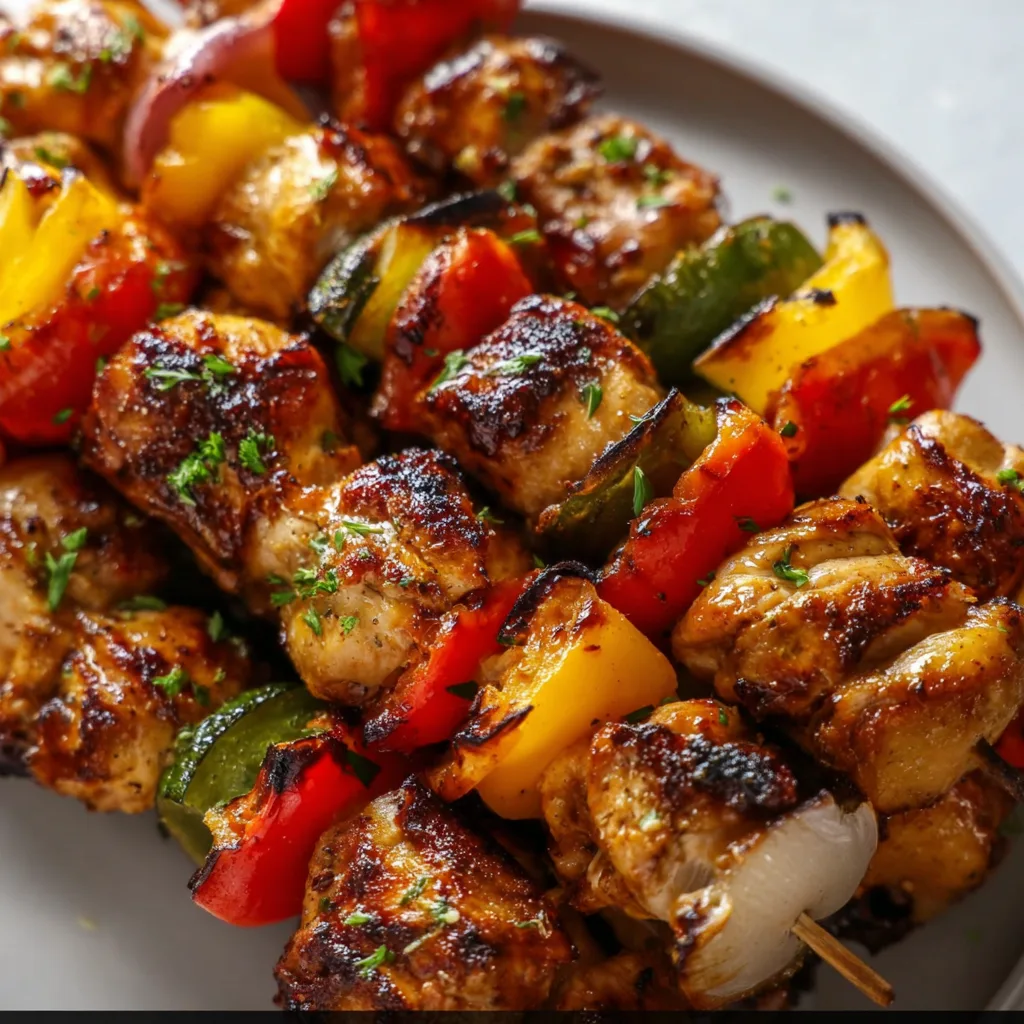

Baked chicken kabobs thread marinated chicken, bell peppers, red onion, and zucchini onto skewers and roast them at 425°F. Even 1.5-inch chicken pieces and similarly sized vegetables are important because every item shares the same 20- to 25-minute oven window.
Baked Chicken Kabobs
Ingredients
- 1.5 lbs boneless, skinless chicken breast or thighs, cut into 1.5-inch cubes
- 1 red bell pepper, cut into chunks
- 1 yellow bell pepper, cut into chunks
- 1 red onion, cut into chunks
- 1 zucchini, sliced thick
- 2 tbsp olive oil
- 2 tbsp lemon juice
- 2 cloves garlic, minced
- 1 tsp dried oregano
- 1/2 tsp paprika
- 1/2 tsp salt
- 1/4 tsp black pepper
- Wooden or metal skewers
Instructions
- If using wooden skewers, soak them in water for 20–30 minutes to prevent burning.
- Preheat oven to 425°F (220°C). Line a large baking sheet with foil or parchment.
- In a large bowl, mix olive oil, lemon juice, garlic, oregano, paprika, salt, and pepper.
- Add chicken to the marinade and toss to coat. Let sit for at least 15 minutes (or up to 4 hours).
- Thread chicken and veggies alternately onto skewers.
- Place kabobs on the baking sheet and bake for 20–25 minutes, turning once halfway, until chicken is fully cooked and lightly browned.
- Serve warm with your favorite sides like tzatziki, rice, or salad.
Recipe Notes
- • Add cherry tomatoes or mushrooms for extra color and flavor.
- • Use metal skewers for easier handling and no soaking required.
- • Great for meal prep—store cooked kabobs in the fridge for up to 4 days.
Nutrition
- Serving Size
- 2 kabobs
- Calories
- 350
- Sugar
- 4g
- Sodium
- 390mg
- Fat
- 16g
- Saturated Fat
- 3g
- Unsaturated Fat
- 11g
- Trans Fat
- 0g
- Carbohydrates
- 10g
- Fiber
- 2g
- Protein
- 35g
- Cholesterol
- 95mg
Why this oven method works
- The lemon, olive oil, garlic, oregano, and paprika marinade coats many small surfaces before the skewers enter the hot oven.
- Turning the skewers halfway exposes both sides to direct oven heat and encourages more even browning.
How to get evenly cooked kabobs
- Soak wooden skewers for the full listed time or use metal skewers, and leave a little space between pieces rather than compressing them.
- Cut dense onion and pepper pieces to match the chicken cube size; slice zucchini thick enough that it does not collapse first.
- Check a center chicken cube for 165°F before removing the tray.
Troubleshooting
The vegetables cook unevenly
Uneven size is the likely cause. Keep pieces comparable and avoid placing all of one vegetable on a single skewer.
The chicken browns poorly
Crowded pieces steam. Leave small gaps and use a large sheet pan so the skewers are not touching.
The exposed skewer ends scorch
Soaking helps but does not always prevent it. Cover the exposed ends with a small piece of foil, or use metal skewers, which the recipe notes list as an option that needs no soaking.
Refrigerate cooked kabobs promptly and use within 3 to 4 days. Remove food from wooden skewers before storing, and reheat without the microwave, which can toughen the chicken.
Frequently asked questions
Can I make baked chicken kabobs without skewers?
Absolutely! Spread the marinated chicken and vegetables on a sheet pan instead. You’ll get the same delicious flavors without the assembly work, though cooking time may decrease slightly.
How do I know when my baked chicken kabobs are done?
Chicken is safely cooked at 165°F internal temperature. The meat should be opaque throughout with clear juices, and vegetables should be tender-crisp.
Can I freeze baked chicken kabobs?
Yes, but freeze them uncooked and unmarinated. Freeze chicken and vegetables separately, then thaw, marinate, and assemble before baking for the freshest results.
What’s the best way to prevent vegetables from overcooking on baked chicken kabobs?
Group similar vegetables together on separate skewers from the chicken. This allows you to remove faster-cooking items earlier while the chicken finishes.
How can I make my baked chicken kabobs more flavorful?
For the most flavorful baked chicken kabobs, use a bold marinade with acid, oil, aromatics, and spices. Marinate longer, up to 4 hours per the Recipe Card, and finish with fresh herbs after baking.
Save this recipe for later
Keep this recipe handy when you are planning another chicken dinner.
Save on Pinterest